Filipe Rodriguez

Chief Technology Officer

Most engineering teams are busy.
Very few are clear.

Filipe Rodriguez

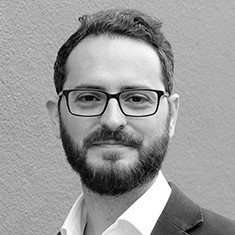
I am a technology executive with over twenty years of experience turning engineering organisations into strategic business drivers. I have built and scaled teams from three to sixty, led AWS migrations, driven SOC2 certifications, and steered AI transformations - always with the same question at the centre: what outcome does this create?

Currently, I serve as Chief Technology Officer at Legatics, a legal technology company transforming how law firms and their clients manage complex transactions. In parallel, I continue working as an executive coach and fractional advisor, mentoring senior technology leaders and supporting early-stage startups with strategic technology decisions.

Before Legatics, I served as CTO at LoyaltyLion, where I led the technology vision for a platform powering loyalty programmes for over ten thousand e-commerce merchants. I have also held CTO and Director of Engineering roles at Curve, CloudMargin, and WeSwap, with earlier experience at ASOS, Story Worldwide, and other agencies. I am Brazilian-born, London-shaped, and driven by the belief that clarity is the highest-leverage tool any leader has.
What being a CTO
really means, to me.

My job is to reduce ambiguity before I reduce cost.

Most engineering inefficiency is not a cost problem - it is a clarity problem. When teams do not understand what success looks like, they build the wrong things. The first job of a CTO is to ensure the organisation agrees on what it is trying to achieve before optimising how it gets there.

Speed is a by-product of alignment, not pressure.

I have never seen a team move faster because someone told them to hurry. I have seen teams become extraordinarily fast when they have understood the why, agreed on what good looks like, and had clear boundaries. Urgency without alignment just creates rework and erodes trust.

Engineering is a business function, not a support function.

If technology is only implementing on requirements handed down from other teams, the company is under-using its strongest lever. Engineering should be shaping strategy, informing pricing, de-risking go-to-market, and surfacing opportunities that only the people closest to the system can see.

Context is more important than control.

Talented engineers do not need micromanagement. They need access to the problem space, the customer pain, and the constraints. Give people the full picture and they will self-correct faster than any process ever could. The job is to distribute context, not decisions.

Good architecture is organisational design made concrete.

Systems fail in the same places teams do. Unclear ownership, blurred boundaries, and poorly defined interfaces create friction between services just as they do between people. If you want better architecture, start by looking at how your teams are structured and how they communicate.

Culture problems are usually leadership problems, delayed.

Silence in meetings, lack of challenge, and over-compliance are signals, not personality traits. When people stop pushing back, it is usually because it feels unsafe or pointless to do so. That is a leadership failure, and it compounds quietly until it becomes a crisis.

Delivery is not shipping code. Delivery is changing outcomes.

If something ships and nothing changes for the user or the business, we have not delivered. We have moved bytes around. Real delivery means measurable change - in behaviour, in revenue, in efficiency. The deployment is the beginning, not the finish line.

AI, tooling, and process only work when behaviour changes.

New tools do not fix old habits. I have seen teams adopt the best tooling available and still operate the same way they did before. The real work is changing how people think, decide, and collaborate. Everything else is amplification of whatever is already there - good or bad.

Focus is an executive responsibility.

Teams do not lack prioritisation frameworks. They lack leaders willing to say no, hold the line, and absorb the discomfort that comes with trade-offs. Saying yes to everything is not strategy. It is avoidance disguised as ambition.

My success is measured by how little I am needed in the day-to-day.

If every important decision routes through me, I am the bottleneck, not the leader. The goal is durable systems, clear ownership, and leaders who can lead without asking for permission. When the organisation runs well without my involvement, that is when I know I have done my job.

Experience

2018 - Present

Executive Coach & Fractional Advisor

Independent

Fractional advisory for an AI SaaS startup in stealth mode. Mentoring senior technology leaders - Heads of Technology and Directors of Engineering - across industries, focusing on leadership, strategy, and organisational growth.

Nov 2025 - Present

Chief Technology Officer

Legatics

Leading the technology strategy for a legal tech platform that transforms how law firms and their clients manage complex legal transactions. Driving engineering excellence, product evolution, and scalable architecture.

Nov 2021 - Nov 2025

Chief Technology Officer

LoyaltyLion

Defined technology vision linking engineering outcomes to commercial objectives. Spearheaded AI transformation, built SRE/DevOps and Data teams from scratch. Supporting 10,000+ merchants on AWS. Led SOC2 certification and compliance for funding activities.

Mar 2021 - Aug 2021

Director of Engineering

Curve

Interim leadership during payment platform consolidation. Refactored core transaction logic to enhance throughput and reliability. Mentored senior engineering leaders.

Dec 2016 - Jan 2021

Chief Technology Officer

CloudMargin

Led agile transformation, growing the team from 3 to 60+ engineers. Migrated to AWS event-driven microservices. Supported Series A and B fundraising. Established the development centre in Romania.

Jan 2015 - Dec 2016

Director, Software Engineering

WeSwap

Built engineering team from 2 to 20+. Led design and launch of web and mobile products. Championed DevOps transformation. Part of the Senior Management Team, reporting to the CEO.

Earlier

Foundation

ASOS, Story Worldwide, Maverick Advertising, Mind Unit

Leadership positions focusing on agile delivery, platform architecture, and team growth across e-commerce, media, and advertising.

Strategic Leadership & Team Building

Scaled engineering organisations from startups to mature companies, recruited diverse talent, and implemented agile and OKR frameworks that connect daily work to business outcomes.

Technology Strategy & Delivery

Translated commercial goals into actionable technology roadmaps, ensuring clear alignment between tech initiatives and measurable business outcomes.

Cloud Infrastructure & Scalability

Directed AWS migrations and microservices design, ensuring resilience, scalability, and cost efficiency in high-transaction-volume environments.

Navigating Ambiguity

Proven track record of rapidly shaping clear, outcome-driven technology strategies from loosely defined business requirements.

BSc (Hons) Business Information Technology

South Bank University, London 2009 - 2012

BSc Information Systems

PUCRS, Porto Alegre, Brazil 2004 - 2005

Diploma in Information Systems & Software Engineering

J.C. Mesquita Technical School, Porto Alegre, Brazil 2001 - 2002